Pre Workout for Muscle Pump: The Real Science Behind That Full, Vascular Feeling
That tight, full, vein-popping feeling mid-workout isn't just for show — it's a real physiological response with its own science. Here's a deep dive into what actually causes a muscle pump, which pre workout ingredients genuinely help, and why some muscles pump easier than others.
Ask any regular lifter what keeps them coming back to the gym, and somewhere in the answer you'll usually hear about "the pump" — that tight, full, almost swollen sensation in the working muscle, veins more visible than usual, skin stretched slightly tighter over the muscle belly. It feels good, it looks good in the mirror, and it's one of the most sought-after in-workout sensations in strength training.
But what actually causes it? And does a pre workout for muscle pump genuinely deliver a bigger pump, or is it mostly about how a product is marketed? This guide breaks down the real physiology, the ingredients that matter, and the factors — beyond supplements — that actually determine how strong your pump feels.
What Is a Muscle Pump, Really?
A muscle pump (technically called "transient hypertrophy") happens when blood flow into a working muscle increases faster than blood flow out of it. Blood plasma and fluid get pushed into the muscle tissue faster than the venous system can drain it, causing the muscle to temporarily swell — sometimes noticeably, sometimes dramatically, depending on the exercise, rep range, and blood flow support in your system.
This isn't the same as long-term muscle growth. A pump fades within an hour or two after training. But it's not purely cosmetic either — the cell swelling associated with a strong pump is believed to play a supporting role in the signaling pathways related to muscle growth over time, alongside mechanical tension and metabolic stress from training itself.
Why the Pump Matters (Beyond Just Looking Good)
Cell Swelling and Growth Signaling — the stretching of the muscle cell membrane during a pump is thought to contribute to anabolic signaling, working alongside — not instead of — heavy lifting and progressive overload. Better Nutrient Delivery — increased blood flow to the muscle means more oxygen and nutrients reaching the tissue during the set itself. Psychological Motivation — there's a reason lifters chase the pump: feeling your muscles fill out mid-workout is genuinely motivating, and that motivation translates into pushing harder on subsequent sets. Visual Feedback — seeing muscles look fuller in the mirror mid-session reinforces the mind-muscle connection, especially for hypertrophy-focused training.
Key Ingredients in a Pre Workout for Muscle Pump
Not every pre workout ingredient targets pump specifically. Here are the ones that actually matter, and their effective doses:
- Citrulline Malate
Converts to arginine in the body and boosts nitric oxide production, which relaxes and widens blood vessels — the single most well-researched ingredient for pump. Effective dose: 6-8g per serving.
- L-Arginine
Directly involved in nitric oxide production, though it's absorbed less efficiently than citrulline when taken orally, which is why citrulline malate has largely replaced arginine as the go-to pump ingredient in modern formulas.
- Nitrates (Beetroot Extract)
Nitrates convert into nitric oxide through a different pathway than citrulline, and research suggests combining both can have an additive effect on blood flow. Effective dose: 300-500mg of beetroot extract, or equivalent nitrate content.
- Glycerol
Draws additional water into muscle tissue (a process called hyperhydration), amplifying the fullness of the pump beyond what blood flow alone produces. Effective dose: 1-3g, though higher-percentage glycerol monostearate formulas can work at lower gram amounts.
- Agmatine Sulfate
A less common but increasingly popular ingredient that supports nitric oxide pathways and is often included specifically for its pump-enhancing reputation among experienced lifters. Effective dose: 500mg-1g.
Pump vs Energy vs Strength: Not Every Pre Workout Prioritizes the Same Thing
This is where a lot of buyers get tripped up. A pre workout loaded with high-dose caffeine for energy isn't necessarily going to deliver a strong pump — and a pump-focused, citrulline-heavy formula with low or no caffeine won't give you the same mental jolt as a stim-heavy one.
If your main goal is muscle pump specifically, look for a formula where citrulline malate (or nitrates) sits at the front of the ingredient list in a clearly disclosed dose — not one where the marketing leads with "extreme energy" and pump ingredients are an afterthought buried in a proprietary blend.
Why Some Muscle Groups Pump Harder Than Others
Not every body part responds to a pump the same way, and this has nothing to do with your supplement — it's simple anatomy:
Arms and Chest tend to pump quickly and noticeably, since they have relatively less overlying fat and connective tissue restricting visible swelling. Back and Legs often need higher rep ranges and shorter rest periods to build a comparable pump, since these muscle groups are larger and the swelling is less visually obvious under typically thicker skin and fascia. Calves and Forearms are notoriously hard to pump for many lifters, largely due to dense fascia restricting how much the muscle can visibly expand, regardless of blood flow.
Understanding this helps set realistic expectations — no pre workout for muscle pump will make your calves pump as visibly as your biceps in a single session; that's more about training approach and individual anatomy.
Training Factors That Affect Pump (Independent of Supplements)
Pre workout ingredients only tell half the story. How you train has just as much impact on how strong your pump feels:
Higher rep ranges (12-20 reps) generally produce a stronger pump than very low-rep, heavy sets, since time under tension and metabolic stress both increase. Shorter rest periods between sets keep blood in the muscle rather than letting it fully drain out between efforts. Drop sets and supersets are particularly effective at maximizing pump, since they extend time under tension without a full recovery break. Mind-muscle connection — deliberately focusing on the working muscle rather than just moving the weight tends to increase blood flow to that specific area.
Nutrition's Role in Muscle Pump
Supplements aside, your everyday diet plays a bigger role in pump than most people realize:
Carbohydrate intake — glycogen stored in muscle holds water, and higher-carb intake in the days leading up to training generally supports a fuller pump. Sodium — contrary to the "avoid salt" mindset some people carry, adequate sodium intake supports fluid retention within muscle tissue, which contributes to pump. Hydration — being under-hydrated reduces overall blood volume, which directly limits how strong a pump can get, regardless of what pre workout you're using.
Common Myths About Muscle Pump
Myth: "A bigger pump always means better muscle growth." Fact: Pump is one contributing factor among several (mechanical tension, training volume, progressive overload), not a direct measure of how much muscle you'll build long-term.
Myth: "If I don't feel a strong pump, my pre workout isn't working." Fact: Some muscle groups and some individuals simply don't experience as dramatic a visible pump, even when blood flow and nitric oxide production are genuinely elevated.
Myth: "More citrulline always means a bigger pump." Fact: Beyond the effective range (roughly 6-8g), additional citrulline doesn't necessarily produce a proportionally bigger pump — it's a case of diminishing returns past the researched dose.
Timing Your Pre Workout for Maximum Pump
Take a citrulline-based pre workout for muscle pump 30-45 minutes before training, slightly earlier than a pure caffeine-based formula, since nitric oxide pathways take a bit longer to ramp up. Pair it with a carbohydrate-containing pre-workout meal or snack if your goal is maximum pump, since glycogen and blood flow work together. Structure your workout with higher reps and shorter rest for the specific muscle group you want to look fullest, rather than relying on the supplement alone.
Who Should Be Cautious With Pump-Focused Ingredients
People on blood pressure medication, since nitric oxide-boosting ingredients can interact with certain drugs Anyone with kidney issues, particularly with high-dose glycerol or arginine
Pregnant or breastfeeding individuals
Anyone under 18
If any of these apply, it's worth checking with a doctor before adding pump-focused ingredients like citrulline, nitrates, or glycerol to your routine.
Final Thoughts
A pre workout for muscle pump can genuinely deliver a fuller, more vascular training experience — but only when it's built around properly dosed, pump-specific ingredients like citrulline malate, nitrates, and glycerol, rather than just a high-caffeine formula marketed with "pump" on the label. Combine the right formula with higher-rep training, adequate carbs, sodium, and hydration, and the difference in how full your muscles look and feel mid-workout becomes genuinely noticeable — not just a placebo from the tingles and the flavor.
View more blogs
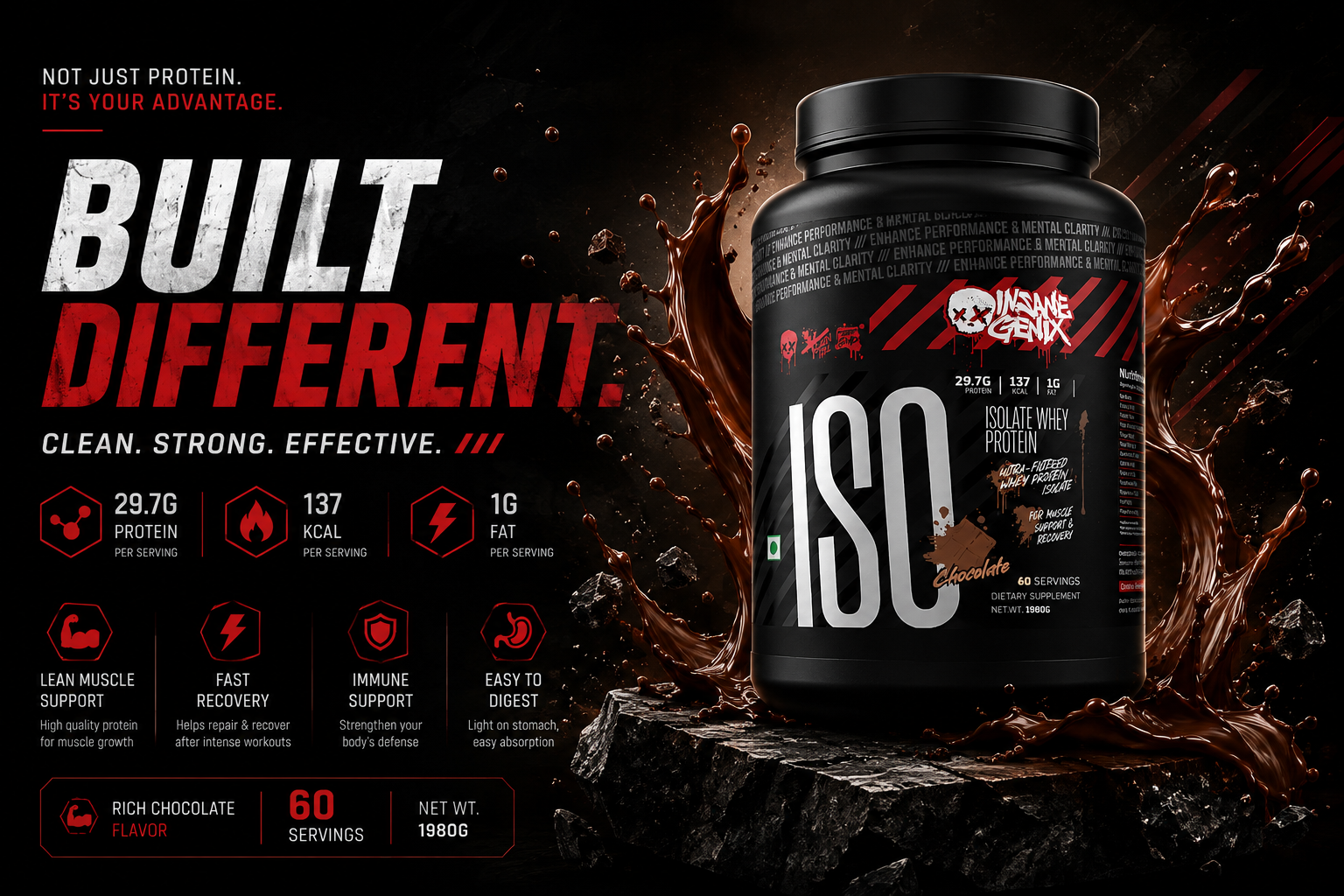
Imported" Isn't a Quality Standard. Here's What Actually Is.
The word "imported" sells a lot of protein tubs, but it rarely tells you what's actually inside. Here's a practical breakdown of what separates genuinely high-quality whey protein from clever labeling, and how InsaneGenix's ISO Isolate stacks up against that standard.
Read article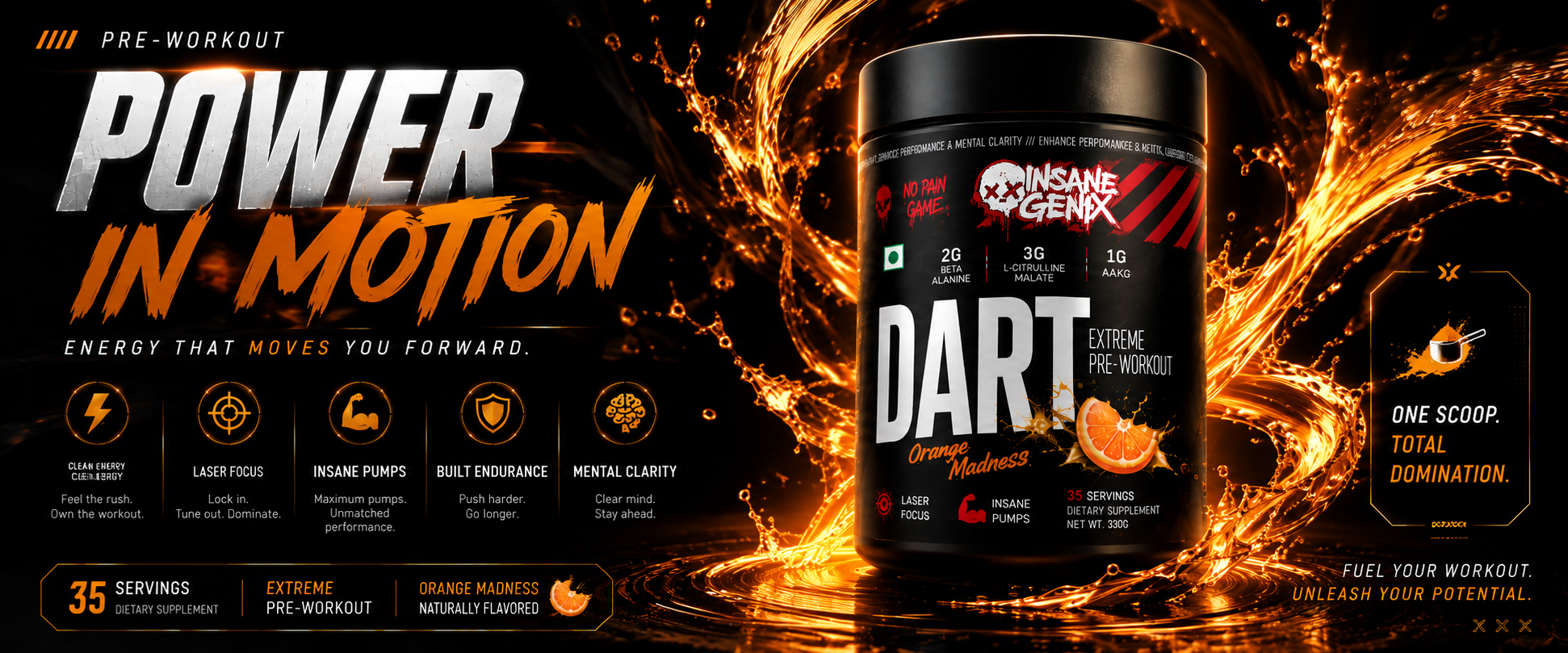
Coffee, Energy Drinks, or a Real Gym Supplement — What Actually Works?
Not every energy boost is created equal, and your gym bag probably has proof of that somewhere in the back. Here's a straight-talking look at what actually fuels a good workout, and why InsaneGenix's DART Extreme keeps showing up in gym bags across serious lifters.
Read article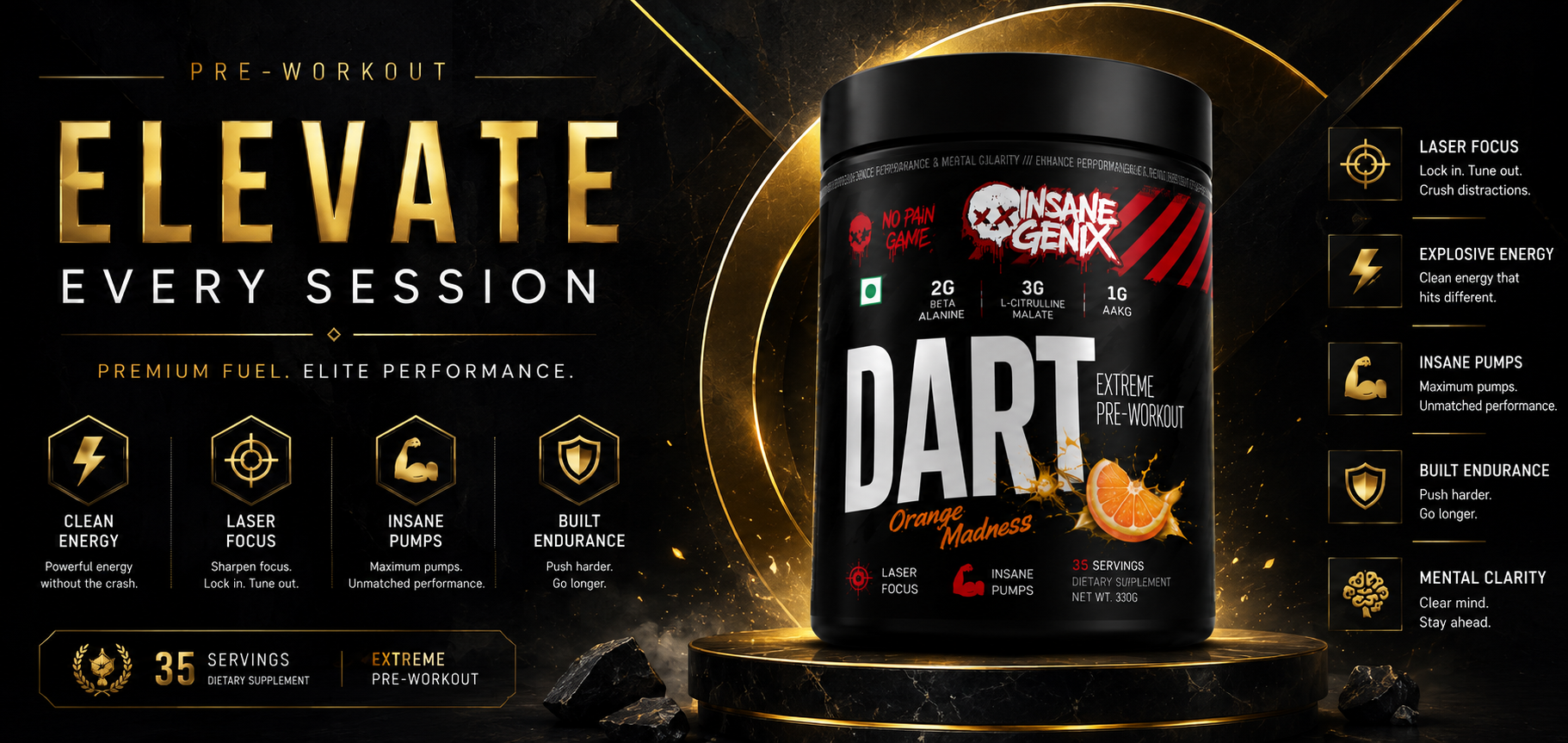
What Should You Actually Take Before Hitting the Gym?
What you take before stepping into the gym can quietly decide how the next hour plays out. Here's a no-fluff look at pre workout timing, ingredients, and why InsaneGenix's DART Extreme fits neatly into a daily gym routine.
Read article