Pre Workout for Strength: What Actually Moves More Weight vs What Just Feels Like It
Feeling amped up and actually being able to lift more weight aren't always the same thing. This guide separates the ingredients and habits that genuinely support strength performance from the ones that just make you feel stronger — and shows how to use pre workout around heavy training without wrecking your CNS.
There's a specific kind of confidence that comes from a strong pre workout kicking in right before a heavy set — heart rate up, focus locked in, ready to move real weight. But here's the uncomfortable truth: feeling amped up and actually lifting more weight aren't automatically the same thing. Plenty of lifters chase a "wired" feeling from their pre workout without it translating into an actual heavier bar.
This guide separates what genuinely drives strength performance from what just feels intense, and covers how to use a pre workout for strength around your heaviest training days without burning out your nervous system in the process.
What "Strength" Actually Depends On
Before looking at supplements, it helps to understand what raw strength performance is built on:
Neural drive — how efficiently your nervous system recruits muscle fibers, especially the larger, higher-threshold motor units needed for maximal effort. ATP-PCr energy system — your body's fastest, most immediate energy source for short, maximal efforts like a heavy single or triple. Technique and motor patterns — often the single biggest factor in how much weight you can safely move, independent of any supplement. Recovery status — strength output drops noticeably under fatigue, poor sleep, or insufficient recovery between heavy sessions.
A pre workout for strength can influence the first two factors meaningfully. It has almost no effect on the last two — no supplement fixes bad technique or a poorly recovered nervous system.
Ingredients That Genuinely Support Strength
- Creatine Monohydrate
The single most well-researched supplement for strength performance, full stop. Creatine increases phosphocreatine stores in muscle, directly supporting the ATP-PCr system that powers short, maximal efforts. Effective dose: 3-5g daily — and this is the key detail most people miss.
- Caffeine
Improves neural drive and reduces the perception of effort during heavy lifts, which can translate into genuinely higher force output on maximal or near-maximal sets. Effective dose: 200-300mg for strength-focused sessions, tolerance-dependent.
- Citrulline Malate
While primarily known for pump, citrulline also supports better blood flow during sustained heavy sets, which can reduce the drop-off in force output across multiple heavy sets in a session. Effective dose: 6-8g.
- Sodium Bicarbonate (Less Common)
Used by some strength and power athletes to buffer acid buildup during near-maximal efforts, though it's less common in standard pre workout formulas due to gastrointestinal side effects at effective doses.
The Creatine Detail Most Lifters Get Wrong
Here's something worth repeating because it trips up so many people: creatine doesn't work as an acute, pre-workout-only ingredient. Its strength benefits come from saturating muscle phosphocreatine stores over time through consistent daily use — not from taking it 20 minutes before a session.
If your pre workout for strength contains creatine, that's genuinely useful, but only if you take it every day, training day or not. Taking it exclusively before workouts and skipping it on rest days significantly undercuts its effectiveness.
Caffeine and Strength: Where the Real Boost Comes From
Caffeine's contribution to strength isn't just "feeling more awake." Research points to caffeine reducing the perceived effort of a lift and improving motor unit recruitment — meaning the same weight can genuinely feel lighter and more controllable under its effects. This is different from the jittery, wired feeling some high-stim products create, which can actually work against technical lifts by making it harder to stay composed and controlled under a heavy bar.
This distinction matters: a pre workout for strength should sharpen focus and reduce perceived exertion, not just spike your heart rate and leave you feeling scattered going into a heavy set.
Timing Your Pre Workout Around Max-Effort Days
Not every training day calls for the same approach:
Heavy Compound / Max-Effort Days Take your pre workout 30-45 minutes before your first heavy lift, giving caffeine time to reach peak effect right as you approach your top sets, not just your warm-ups.
Volume/Accessory Days A lighter dose (or none at all) is often more appropriate — these sessions rely more on total training volume and technique refinement than maximal neural drive.
Deload Weeks This is a detail rarely mentioned: during a planned deload, it's often worth reducing or skipping stimulant-heavy pre workout altogether. Deloads exist partly to let your central nervous system recover, and continuing high-stim use through that week can blunt the intended recovery benefit.
Competition or Testing Days If you're testing a 1RM or competing in a meet, this is not the day to try a new pre workout for strength for the first time. Stick with a formula and dose you've already used successfully in training, since an unfamiliar product introduces unnecessary risk on your most important lifts.
CNS Fatigue: The Overlooked Risk for Strength Athletes
Strength-focused training already places significant demand on your central nervous system, and daily high-dose stimulant use compounds that load. Signs of accumulating CNS fatigue include:
Needing progressively more caffeine to feel the same effect
Feeling flat or unmotivated on days without pre workout
Strength numbers plateauing or declining despite consistent training
Poor sleep quality, even on nights without late training
If any of this sounds familiar, cycling off stimulant-based pre workout for 1-2 weeks periodically can help reset sensitivity and, counterintuitively, often improves training output once you resume.
A Common Mistake: Chasing Stimulation Instead of Output
It's easy to equate feeling extremely wired with a pre workout "working" — but for strength specifically, the goal isn't maximum stimulation, it's maximum controlled force output. Pushing a heavier weight than your technique can safely support, purely because a high-stim pre workout made you feel invincible, is one of the more common ways lifters get injured on heavy compound lifts. A pre workout for strength should support your training, not override your judgment about what you can safely lift with good form.
What Actually Limits Strength Beyond Supplements
Sleep — strength output is measurably impaired by poor or insufficient sleep, more than almost any other recoverable factor. Protein and overall nutrition — muscle repair and adaptation depend on adequate intake, independent of pre workout use. Progressive overload and programming — consistent, structured increases in training demand drive long-term strength far more than any single supplement. Recovery between heavy sessions — training the same movement pattern heavy too frequently without adequate recovery caps strength gains regardless of what you take beforehand.
Who Should Be Cautious With Strength-Focused Pre Workout
People with heart conditions or uncontrolled high blood pressure, particularly given the higher caffeine doses often used for strength work
Anyone with kidney concerns, regarding higher creatine intake
Pregnant or breastfeeding individuals
Anyone under 18
If any of these apply, check with a doctor before starting a strength-focused pre workout regimen, particularly around higher-dose stimulant use.
Final Thoughts
A pre workout for strength genuinely earns its place when it's built around ingredients with real evidence behind them — daily creatine for phosphocreatine saturation, caffeine dosed to reduce perceived effort rather than just spike energy, and citrulline to support blood flow across heavy sets. The feeling of being "amped up" is not the same thing as actually moving more weight, and understanding that difference is what separates lifters who use pre workout effectively from those who just use it to feel intense. Combine the right formula with consistent daily creatine use, smart timing around your heaviest days, and genuine recovery, and the difference shows up where it actually matters — on the bar.
View more blogs
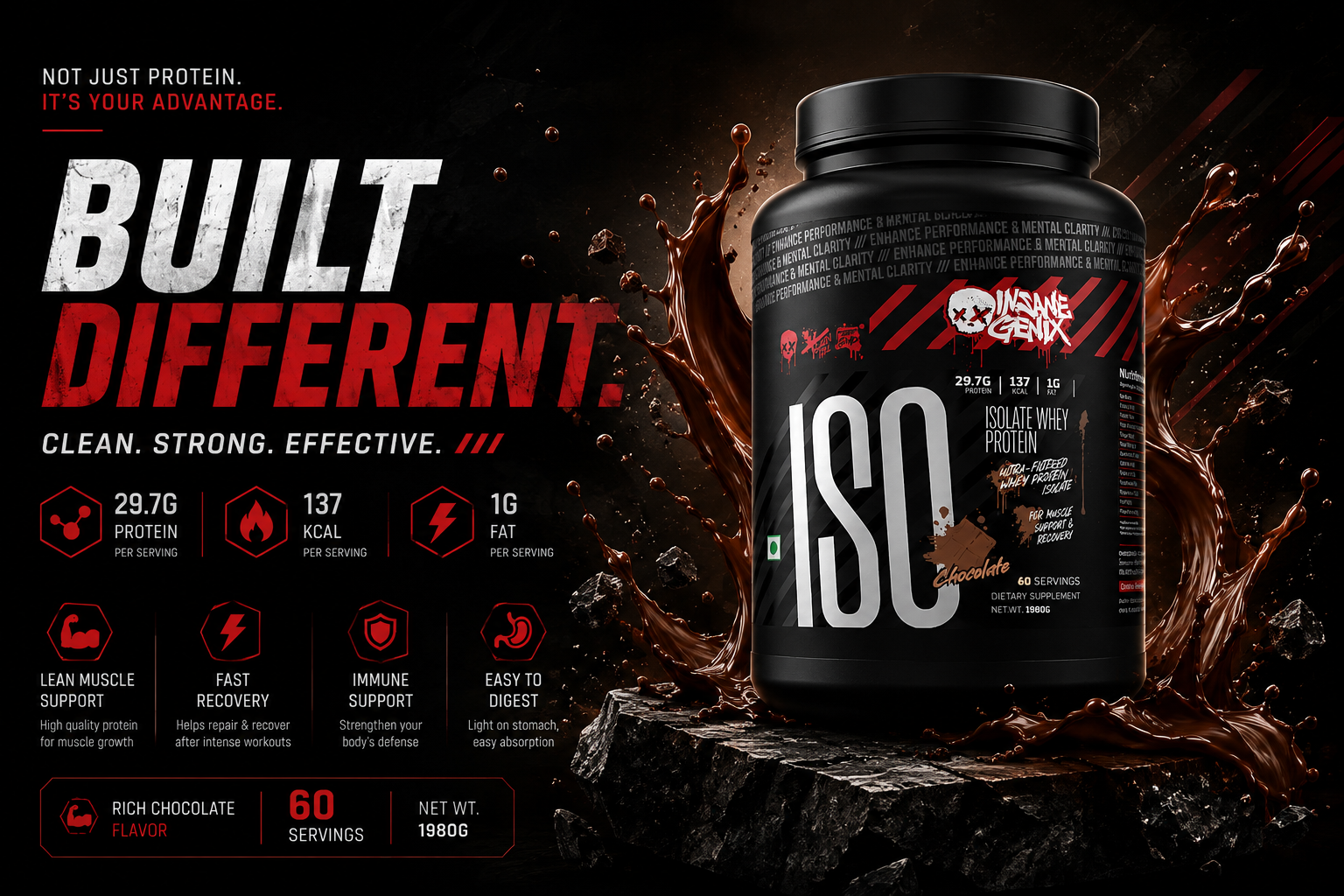
Imported" Isn't a Quality Standard. Here's What Actually Is.
The word "imported" sells a lot of protein tubs, but it rarely tells you what's actually inside. Here's a practical breakdown of what separates genuinely high-quality whey protein from clever labeling, and how InsaneGenix's ISO Isolate stacks up against that standard.
Read article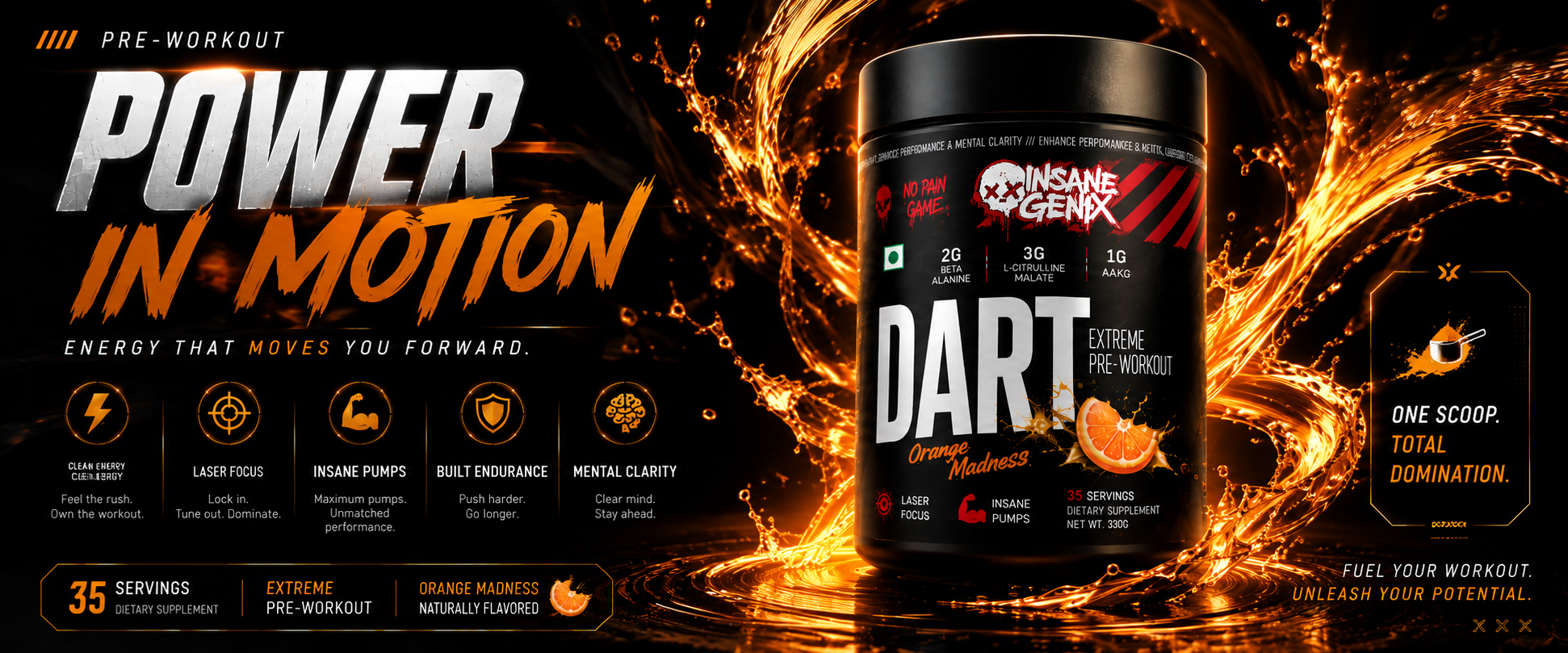
Coffee, Energy Drinks, or a Real Gym Supplement — What Actually Works?
Not every energy boost is created equal, and your gym bag probably has proof of that somewhere in the back. Here's a straight-talking look at what actually fuels a good workout, and why InsaneGenix's DART Extreme keeps showing up in gym bags across serious lifters.
Read article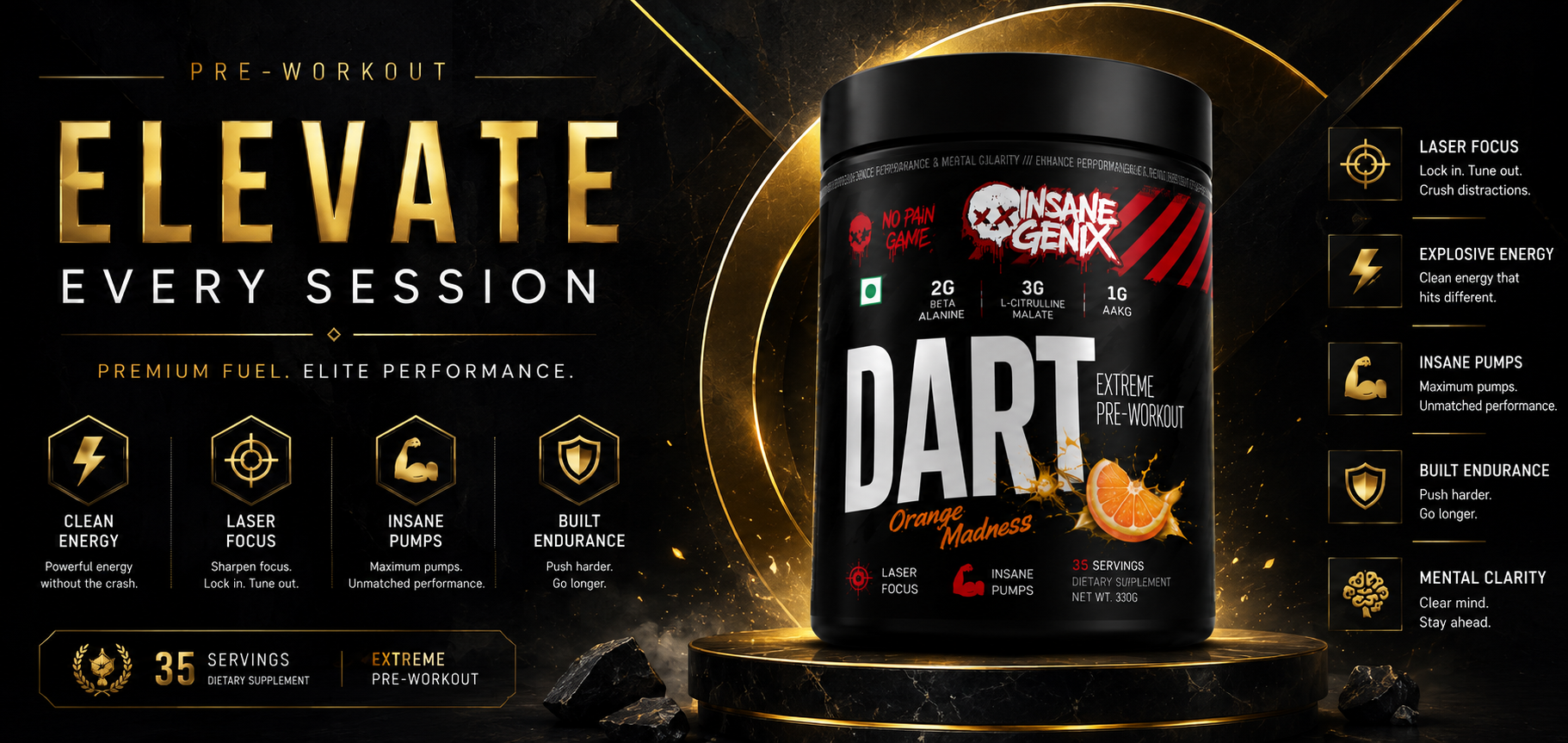
What Should You Actually Take Before Hitting the Gym?
What you take before stepping into the gym can quietly decide how the next hour plays out. Here's a no-fluff look at pre workout timing, ingredients, and why InsaneGenix's DART Extreme fits neatly into a daily gym routine.
Read article